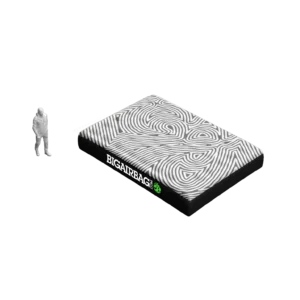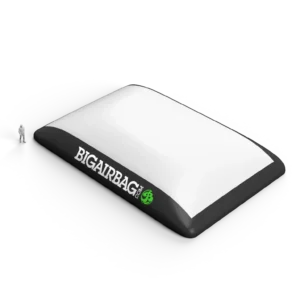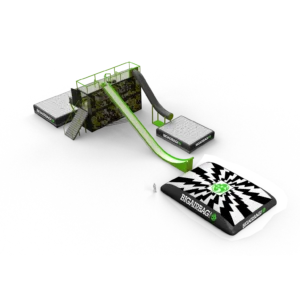
For years, innovation in the airbag industry has been measured by one thing: performance. Stronger materials, better impact absorption, longer product lifespans, and safer landings have all driven the evolution of modern landing systems. At BigAirBag®, these priorities remain at the heart of everything we do. Today, however, we believe innovation must go one step further. As manufacturers, we have a responsibility to consider not only how our products perform, but also how they are produced, maintained, and managed throughout their entire lifecycle. That philosophy has led us to rethink the future of sustainable airbags – combining the safety and reliability our customers expect with a stronger commitment to circular design and responsible material choices.

Why sustainability matters in landing systems
Airbags are built to withstand years of intensive use in demanding environments. They must tolerate thousands of impacts, changing weather conditions, transportation, installation, and continuous operation without compromising safety. Traditionally, achieving this level of durability has relied heavily on PVC-based materials. While these materials have served the industry well, we recognised an opportunity to improve both performance and environmental responsibility.
Rather than treating sustainability as a marketing initiative, we launched our Circularity Initiative to rethink how our products are designed from the ground up. Our goal is simple: continue delivering world-class landing systems while reducing waste, improving recyclability, and extending product lifecycles wherever possible.
Designing sustainable airbags starts with better materials
One of the biggest changes in our product development is the transition from conventional PVC-based construction toward polypropylene (PP)-based materials. This material shift forms the foundation of our next generation of sustainable airbags. PP offers several important advantages that benefit both customers and the environment.
According to research and testing, polypropylene provides higher tensile strength and up to three times greater tear resistance than conventional PVC materials. This means that the airbags become tougher and more resistant to wear while remaining lighter and easier to handle.
Lower weight also offers practical advantages throughout the product lifecycle. Transportation, installation, relocation, and servicing all become more efficient, potentially reducing the resources required during long-term operation. Most importantly, PP creates a much stronger foundation for circular product design because it is widely compatible with existing recycling systems.
Moving towards a more circular future
Our circularity model begins with carefully sourced polypropylene materials before progressing through manufacturing, installation, years of customer use, maintenance, repair, and ultimately a planned buy-back programme for products that have reached the end of their operational life.
Where possible, recoverable materials are processed by recycling partners and transformed into recycled pellets or other products, helping reduce unnecessary waste and keeping valuable materials in circulation. Although this process is still evolving, it represents an important step toward more responsible lifecycle management.

Performance and sustainability can go together
There is often a misconception that environmentally responsible products require compromises in performance. Our experience shows the opposite.
The new generation of sustainable airbags has been developed to perform at least as well as previous systems – and in several areas, even better. Internal testing in high-throughput training environments has shown lower wear compared with earlier PVC-based constructions, supporting longer operational lifetimes without sacrificing safety or reliability.
This philosophy reflects something we strongly believe: the most sustainable product is often one that lasts longer. In addition, extending service life reduces replacement frequency, lowers material consumption over time, and allows operators to maximise the value of their investment.
Building an eco-friendly landing airbag without sacrificing safety
Every BigAirBag® product is first and foremost a safety system. Regardless of material innovations, our airbags must continue to deliver the impact absorption, reliability, and consistency expected by athletes, coaches, attractions, and operators around the world. Developing an eco-friendly landing airbag therefore means improving environmental performance while maintaining the engineering principles that define our products.
Our airbags continue to incorporate proven design features such as advanced chamber construction, durable fabrics, professional installation support, and internationally recognised quality standards. Throughout this transition, safety remains our highest priority.
Repair before replacement
Another important aspect of sustainability is extending the usable life of existing products. Instead of encouraging unnecessary replacement, we remain committed to servicing and repairing airbags wherever possible. Regular inspections, maintenance, replacement parts, and refurbishment programmes help operators keep systems performing safely for many years. This repair-first philosophy supports both our customers and our sustainability objectives by reducing avoidable waste while maximising product longevity.
Creating a sustainable landing airbag for future generations
Our vision extends beyond today’s products. We continue investing in research into recyclable topsheet materials, blower efficiency improvements, lifecycle assessments. We constantly seek further opportunities to simplify material construction. Every improvement moves us closer to creating a truly sustainable landing airbag that balances performance, durability, and environmental responsibility.
Importantly, we see this as an ongoing journey rather than a finished achievement. Some initiatives have already been implemented, while others remain under development and validation as part of our long-term roadmap.
Why recyclability matters
At the end of every product’s life, material recovery becomes increasingly important. By moving toward mono-material construction wherever practical, we are laying the groundwork for a more recyclable landing airbag. Polypropylene’s compatibility with established recycling systems simplifies end-of-life processing compared with traditional mixed-material constructions and supports future closed-loop recovery opportunities.
Although not every component can currently be recycled, reducing material complexity is a significant step toward increasing overall recyclability and lowering long-term environmental impact.
Progression without compromise
At BigAirBag®, progression has always meant helping athletes, operators, and attractions redefine their limits safely. Today, we believe progression should also include how we design, manufacture, maintain, and recover our products.
Our investment in sustainable airbags reflects that broader vision. By combining stronger materials, improved durability, circular product design, repair-first thinking, and responsible end-of-life pathways, we are working toward landing systems that perform exceptionally while placing greater emphasis on long-term environmental responsibility.
The future of airbags is about more than softer landings. It is about smarter design, longer-lasting products, and continuous innovation that benefits both our customers and the world around us. As our Circularity Initiative continues to evolve, we remain committed to proving that performance and sustainability can progress together.